Double Brush Stroke Clipart Element: A Practical Guide for Digital Creators
In the evolving landscape of digital design, efficiency and aesthetic versatility are paramount. For graphic designers, hobbyists, and small business owners, sourcing high-quality visual assets can often be a bottleneck in the creative process. The Double Brush Stroke Clipart Element emerges as a specialized resource designed to streamline this workflow. This article provides an objective evaluation of this digital product, examining its technical specifications, practical applications, and suitability for various design projects to help you determine if it aligns with your creative goals.
Understanding the Product Specifications
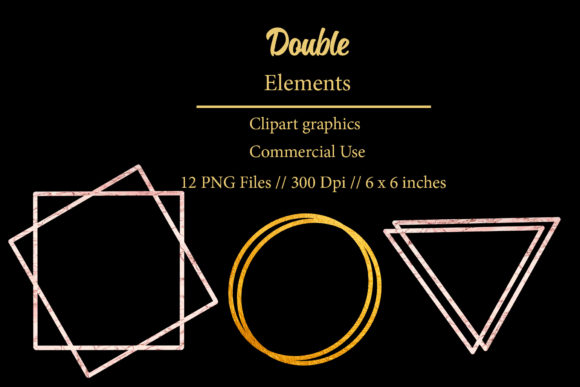
Before integrating any asset into a design library, it is crucial to understand the technical foundation. The Double Brush Stroke Clipart Element is delivered as a digital product, meaning there is no physical shipment involved. Upon purchase, users receive a compressed .ZIP file containing 12 individual transparent PNG elements. It is essential to note that these files must be extracted from the archive after downloading to be accessible for use in design software.
The technical quality of these assets is standardized for professional use. Each brush stroke is rendered at 300 DPI (dots per inch), which is the industry standard for high-resolution printing. The dimensions are set at 6 x 6 inches, providing a square canvas that allows for flexibility in scaling. The use of the PNG format with transparency is a significant feature, as it allows designers to layer these brush strokes over photographs, solid colors, or other graphics without the interference of a white or colored background box. This transparency is critical for maintaining a clean, professional look in composite designs.
Practical Applications and Use Cases
The versatility of the Double Brush Stroke Clipart Element lies in its adaptability across multiple mediums. Because the files are high-resolution raster images, they are suitable for both digital and print applications. Below are several contexts where these elements prove particularly effective:
- Printed Materials: The 300 DPI resolution makes these elements ideal for physical products. Designers frequently use them in planner goodies, invitations, and stationery to add a hand-painted, organic feel to structured layouts. They are also effective on business cards, where a subtle brush accent can break up text-heavy designs.
- Apparel and Sublimation: For those involved in print-on-demand or DIY crafts, these PNGs are compatible with sublimation designs. They can be applied to mugs, fabric, and T-shirts. However, users should ensure their printing equipment supports high-quality PNG transparency to avoid jagged edges or background artifacts.
- Digital Media and Branding: In the digital realm, these strokes serve as excellent components for logos, blog graphics, and web decor. They can soften the rigid lines of corporate branding or add energy to social media advertising campaigns. Their transparent nature allows for seamless integration into website headers or email newsletters.
- Sticker Creation: The distinct shape of brush strokes lends itself well to die-cut stickers. When paired with a white border in design software, these elements can become standalone decorative items for planners or laptops.
Evaluating Benefits and Tradeoffs
When considering the acquisition of the Double Brush Stroke Clipart Element, it is helpful to weigh the advantages against potential limitations. Understanding these factors ensures realistic expectations and optimal usage.
Key Benefits
The primary advantage is time efficiency. Creating authentic-looking brush strokes from scratch requires specific digital painting skills, appropriate brushes, and significant time. By utilizing pre-made elements, designers can bypass the creation phase and move directly to composition. Additionally, the consistency of the 12-element set allows for cohesive design systems. Using variations from the same pack ensures that the weight, texture, and style of the strokes remain uniform throughout a project, such as a multi-page invitation suite or a brand identity guide.
Another benefit is accessibility. Users do not need advanced illustration skills to achieve a professional artistic effect. The transparent PNG format is universally supported by major design platforms, including Adobe Photoshop, Illustrator, Canva, Procreate, and Silhouette Studio, making it accessible to both novice and expert users.
Considerations and Limitations
It is important to recognize that these are raster images, not vector files. While 300 DPI is sufficient for most print needs up to the specified 6x6 inch size, scaling these images significantly larger may result in pixelation or loss of clarity. If a project requires a massive banner or billboard-sized graphic, vector-based alternatives might be more appropriate.
Furthermore, because these are pre-designed elements, there is a limit to customization. While you can change the color of the brush stroke using blending modes or adjustment layers in software like Photoshop, you cannot easily alter the fundamental shape or texture of the stroke without advanced editing skills. Users seeking complete control over every bristle and curve may prefer creating their own assets or purchasing customizable brush sets for digital painting software.
Decision-Making Insights: Is This Right for You?
Determining whether the Double Brush Stroke Clipart Element is a strong fit for your needs depends on your specific project requirements and workflow preferences. Consider the following scenarios:
This product is a strong fit if:
- You need quick, high-quality accents for print-on-demand products like mugs and T-shirts.
- You are designing stationery or invitations and want a cohesive, hand-crafted aesthetic without drawing each element manually.
- You work primarily in raster-based software (like Photoshop or Canva) and value the convenience of transparent backgrounds.
- You are looking to expand a digital asset library with versatile, neutral design elements that can complement various color palettes.
You may want to consider alternatives if:
- Your projects require infinite scalability without quality loss, in which case vector SVG or EPS files would be superior.
- You need highly specific, custom-shaped strokes that deviate significantly from standard brush patterns.
- You are working exclusively in vector-based software (like Adobe Illustrator) and prefer to keep your workflow entirely vector-based to maintain editability.
Best Practices for Implementation
To maximize the value of the Double Brush Stroke Clipart Element, adhere to a few best practices. First, always extract the .ZIP file immediately after downloading to ensure all 12 PNGs are accessible and organized. Second, when using these elements in print projects, verify that your document settings match the 300 DPI resolution to prevent inadvertent downscaling. Third, experiment with blending modes such as "Multiply" or "Overlay" to integrate the brush strokes more naturally with underlying textures or images, rather than simply placing them on top. This technique can enhance the organic feel of the design.
In conclusion, the Double Brush Stroke Clipart Element offers a practical, efficient solution for designers seeking to add artistic flair to their projects. By understanding its technical constraints and leveraging its transparency and resolution, users can effectively incorporate these assets into a wide range of creative works, from everyday stationery to commercial branding materials.