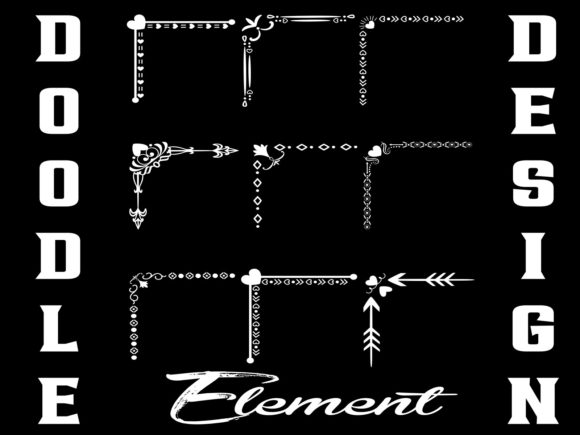
Strategic Branding and Design Efficiency with Corner Doodle Vector Elements
In the competitive landscape of digital design and print-on-demand commerce, visual consistency is not merely an aesthetic preference; it is a strategic asset. For entrepreneurs, marketers, and creative professionals, the ability to rapidly deploy high-quality graphical assets can significantly impact operational efficiency and brand perception. This is where the Corner Doodle Vector Element emerges as a critical tool. Far from being simple decorative accents, these elements serve as foundational components for framing content, guiding user attention, and establishing a cohesive visual identity across diverse media formats.
When integrated thoughtfully into your design workflow, corner doodles transform static layouts into dynamic compositions. They provide structure without rigidity, offering a hand-drawn, organic feel that resonates with modern audiences seeking authenticity. Whether you are designing for sublimation printing on apparel, creating engaging social media graphics, or developing professional invitation cards, understanding the strategic application of these vector elements can elevate your output from generic to distinctive.
The Strategic Value of Organic Design Elements
The modern consumer is inundated with polished, corporate-style imagery. In response, there has been a significant shift toward designs that feel human, approachable, and authentic. A Corner Doodle Vector Element embodies this shift. By utilizing sketchy, freehand, or grunge-style strokes, designers can inject personality into their work. This is particularly valuable for small business owners and freelancers who need to differentiate their brands in crowded marketplaces.
From a psychological perspective, these elements act as visual anchors. When placed in the corners of a design, they frame the central message, subtly directing the viewer’s eye toward the core content. This is essential for effective communication. Whether the goal is to highlight a promotional offer on a T-shirt or to emphasize key information on an infographic, the strategic placement of doodles enhances readability and retention. The irregular, rough textures associated with pen, pencil, or brush strokes create a sense of movement and energy, preventing designs from appearing stagnant or overly formal.
Versatility Across Print-On-Demand and Digital Media
One of the primary advantages of incorporating Corner Doodle Vector Elements into your asset library is their unparalleled versatility. Because these files are typically provided in scalable vector formats such as EPS and SVG, they maintain crisp quality at any size. This scalability is crucial for professionals who operate across multiple product lines. Consider the following practical applications:
- Apparel and Sublimation: For T-shirt designers, corner elements can frame text-based designs or logos, adding depth and context without overwhelming the main graphic. The transparent background of PNG files ensures seamless integration onto colored fabrics, while the high resolution (300 dpi) guarantees professional print quality.
- Home Decor and Accessories: When designing for mugs, pillows, or wall art, these elements can be used to create borders that soften the overall look. A swirl or scratch effect in the corner can turn a simple quote into a curated piece of art.
- Marketing Materials: For flyers, brochures, and invitation cards, corner doodles provide a consistent thematic thread. Using the same style of doodle across various marketing touchpoints reinforces brand recognition.
- Digital Content: In web design and social media posts, these vectors can be used to highlight call-to-action buttons or frame testimonials. Their lightweight file sizes ensure fast loading times, which is critical for user experience and SEO.
The ability to use these assets for vinyl decals, stickers, and scrapbooking further expands their utility. Crafters and hobbyists value the ease with which these files can be imported into cut machines. The clean lines of a vector file allow for precise cutting, reducing material waste and improving production efficiency.
Technical Considerations for Optimal Workflow
To maximize the benefits of Corner Doodle Vector Elements, it is essential to understand the technical specifications and how they influence your workflow. High-quality design assets should offer flexibility in editing and compatibility with industry-standard software. When acquiring these resources, prioritize packages that include multiple file formats to ensure seamless integration into your existing tools.
File Format Breakdown:
- EPS and SVG Files: These are the most critical formats for professional designers. SVG (Scalable Vector Graphics) and EPS (Encapsulated PostScript) files allow for infinite scalability without loss of quality. More importantly, they are fully editable. You can change colors, adjust stroke widths, and modify shapes to match your specific brand palette. This "100% color changeable" feature is vital for maintaining brand consistency across different campaigns.
- PNG Files: For users who do not have advanced vector editing software, high-resolution PNGs are indispensable. A standard of 4500x5400 pixels at 300 dpi ensures that the image remains sharp even when printed on larger surfaces. The transparent background is a non-negotiable feature, allowing for easy layering over complex backgrounds or textured materials.
- JPG Files: While less flexible due to their solid background, JPGs serve as excellent quick-preview files. They allow designers to rapidly assess the aesthetic fit of a doodle before committing to the more complex editing process involved with vector files.
Efficiency in file management is also a key consideration. Receiving assets in a compressed ZIP file requires proper extraction protocols. Using reliable software such as WinZIP or WinRAR ensures that file integrity is maintained during extraction. For many users, a direct double-click extraction may suffice, but verifying that all layers and paths are intact post-extraction is a best practice that prevents downstream technical issues.
Risk Management: Avoiding Design Clutter
While Corner Doodle Vector Elements are powerful tools, their misuse can lead to visual clutter and diluted messaging. A common pitfall among novice designers is the over-application of decorative elements. When every corner of a design is filled with heavy scribbles, swirls, or textures, the central content can become obscured. This contradicts the primary goal of design: clear communication.
To mitigate this risk, adopt a strategy of intentional minimalism. Ask yourself: Does this element add value? Does it guide the eye or distract from it? Use doodles to support the hierarchy of information, not to compete with it. For instance, if your design features a complex illustration, a subtle, thin-line corner accent may be more appropriate than a bold, grunge-style frame. Conversely, for text-heavy designs, a stronger visual anchor in the corner can help balance the composition.
Furthermore, consider the context of the medium. A design intended for a small sticker requires different scaling and complexity than one intended for a large sublimation print. Always preview your designs at actual size to ensure that the details of the doodle remain visible and effective. Ignoring these contextual nuances can result in products that look amateurish or unprofessional, potentially harming brand credibility.
Enhancing Creativity and Productivity
For creators facing tight deadlines, having a library of pre-made Corner Doodle Vector Elements can significantly boost productivity. Instead of starting from scratch, designers can leverage these assets as building blocks. This approach allows for rapid prototyping and iteration. You can experiment with different combinations of arrows, bubbles, circles, and curves to find the perfect frame for your content.
This efficiency does not come at the cost of creativity. On the contrary, by handling the structural aspects of design with ready-made elements, you free up mental bandwidth to focus on higher-level strategic decisions. You can concentrate on messaging, color theory, and audience targeting, knowing that the foundational graphical elements are already polished and professional.
Additionally, these elements foster consistency across large projects. If you are launching a product line with multiple variations, using the same set of corner doodles creates a unified visual language. This coherence strengthens brand identity and makes your offerings instantly recognizable to customers. It is a subtle but powerful form of branding that builds trust and familiarity over time.
Making Informed Decisions for Long-Term Success
Integrating Corner Doodle Vector Elements into your design strategy is more than a tactical choice; it is a long-term investment in your creative infrastructure. By selecting high-quality, versatile assets, you equip yourself to respond quickly to market trends and client demands. Whether you are creating printable decorations, engraving designs, or developing infographics, these elements provide the flexibility needed to adapt and thrive.
Remember that the ultimate goal is to enhance the customer experience. Every design decision, from the choice of a sketchy stroke to the placement of a swirl, should serve the end-user. Clear, attractive, and well-structured designs communicate professionalism and care. They invite engagement and drive conversion. By mastering the use of corner doodles, you position yourself not just as a creator of images, but as a strategist of visual communication.
As you expand your portfolio, continue to evaluate the performance of your designs. Seek feedback, analyze sales data, and refine your approach. The strategic use of vector elements is an evolving practice, one that rewards attention to detail and a commitment to quality. Embrace these tools, experiment with their possibilities, and let them elevate your creative output to new heights.